AICloseAIPosts from this topic will be added to your daily email digest and your homepage feed.FollowFollowSee All AI
Posts from this topic will be added to your daily email digest and your homepage feed.
See All AI
ReportCloseReportPosts from this topic will be added to your daily email digest and your homepage feed.FollowFollowSee All Report
Posts from this topic will be added to your daily email digest and your homepage feed.
See All Report
Why China is giving away its best AI models
Chinese labs like Moonshot are forcing OpenAI, Google, and Anthropic to rethink what they lock away.
Chinese labs like Moonshot are forcing OpenAI, Google, and Anthropic to rethink what they lock away.

Posts from this author will be added to your daily email digest and your homepage feed.
See All by Robert Hart
Link
Share
Gift

Posts from this author will be added to your daily email digest and your homepage feed.
See All by Robert Hart
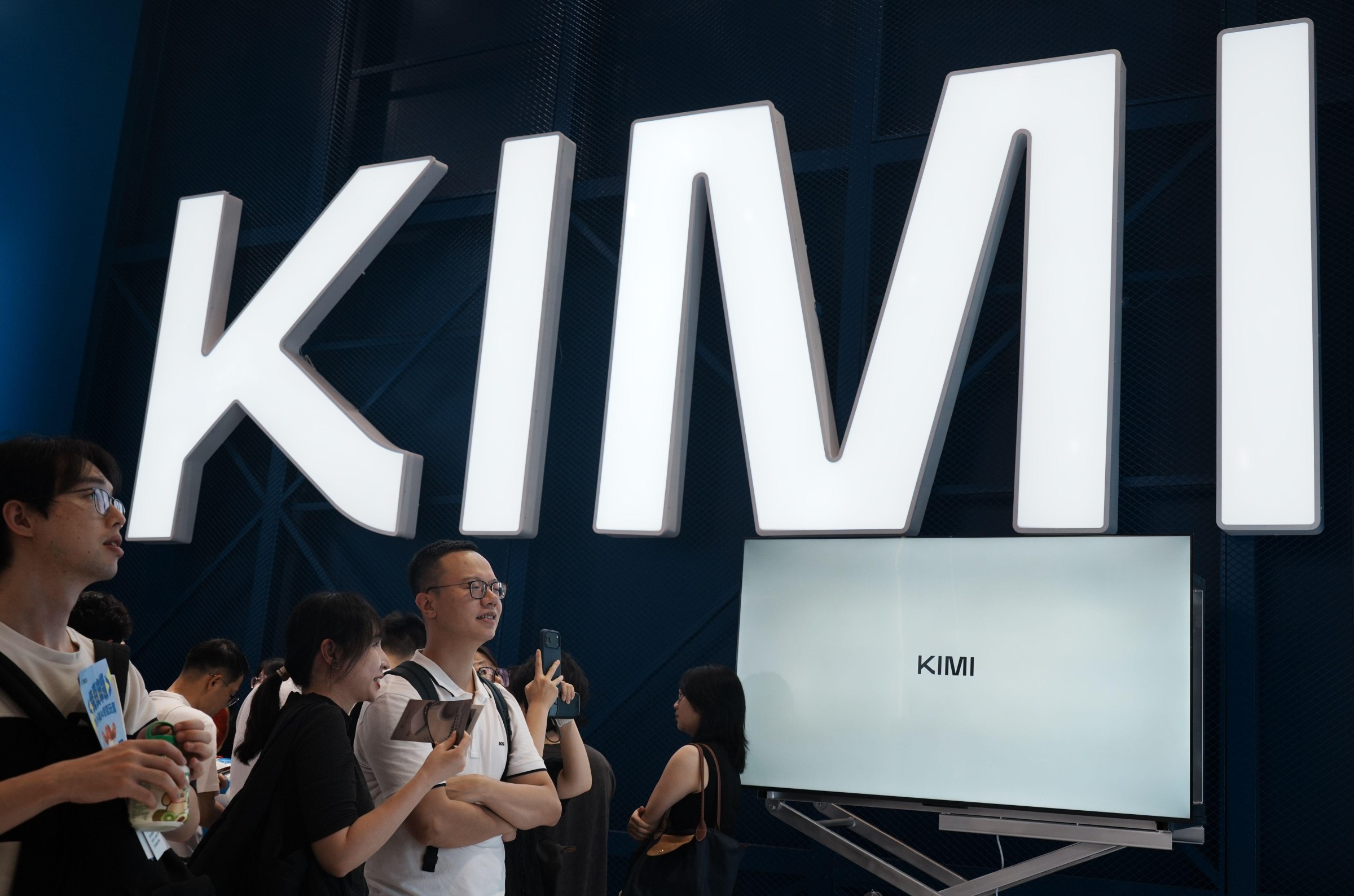
Silicon Valley has spent much of the past week on red alert, digesting the arrival of Moonshot AI’s Kimi K3, a Chinese AI model that can allegedly beat some of the best systems built by US companies at a fraction of the cost.
arrival of Moonshot AI’s Kimi K3
Its performance alone would have been enough to intensify the rivalry between the US and China. But Moonshot’s plan to release the model’s weights for free — and its clear targeting of US users — has fueled deeper unease about whether closed American models can continue to dominate as increasingly capable open alternatives enter the market.
intensify the rivalry between the US and China
Open-weight models give developers far greater control than proprietary systems, allowing them to inspect how the AI functions, run the AI locally on their own infrastructure, customize the systems, and build new products without depending on a single provider. They’re often a lot cheaper, too. That raises an obvious question: Why would an AI company spend vast sums of money training an AI model, only to give away some of the most valuable parts?
Related
China delivers a one-two punch to America’s AI dominance
China delivers a one-two punch to America’s AI dominance
America needs to stop getting shocked by Chinese AI
America needs to stop getting shocked by Chinese AI
Kimi K3, like other open-weight AI models, isn’t fully “open.” In software, “open source” has a settled definition: Source code is publicly available to use, modify, and redistribute freely, only requiring that this is also done openly. AI systems are more complicated, and very few are truly open in the traditional software sense. Most companies instead release something called model weights — the numerical parameters learned during an AI’s training period — while keeping other crucial components, including training data, code, model architecture, and configuration methods, private. Most also come with restrictive licenses limiting how they can be used or redistributed.
Together, this means open-weight AI cannot be re-created from the ground up in the way true open-source software can. But it does provide enough power and flexibility that a company can make money off of it.
“A free set of weights is not a free AI service.”
“A free set of weights is not a free AI service,” said Fordham Law School professor Chinmayi Sharma. “A company can give away the model weights while making money elsewhere in the stack.” There are ample opportunities to do so. Running a model still requires computing infrastructure, engineering, security, maintenance, and support, all of which companies can charge through hosted access or other arrangements. For some companies, the payoff may be broader, such as an increased demand for cloud computing services or advanced computer chips.
Openness can also be a powerful strategy for gaining a competitive edge. Releasing a model’s weights can encourage more companies and developers to use it, which in turn can lead to an entire ecosystem of tools and infrastructure being built around it. Over time, that can help a model become a “de facto standard,” Sharma said. Kyle Miller, a senior research analyst at Georgetown’s Center for Security and Emerging Technology, made a similar point, citing Alibaba’s large family of Qwen open-weight AI models in China as an example of how deeply embedded an open system can become across an industry.
That creates a clear problem for the US AI giants. If a generation of tools and developers start building around capable open-weight models like Kimi K3, the industry’s center of gravity could start to shift away from proprietary platforms like Gemini, Claude, and ChatGPT. While it remains to be seen whether frontier-level open-weight models are actually cheaper to run in practice, they have historically offered a lower-cost alternative to proprietary systems. They also offer more freedom for developers at a time when US labs are tightening access and imposing stricter guardrails for their latest models. There are already signs that some US companies are shifting toward cheaper Chinese models.
There is no single reason behind China’s support for open-weight AI, but it appears to be a mix of practical constraints and political strategy. An open ecosystem gives Chinese companies a way to innovate near the frontier despite tighter access to advanced chips and computing power, while fitting neatly into Beijing’s broader industrial strategy of encouraging wider adoption of Chinese models, tools, and infrastructure. The approach is also convenient for expanding China’s technological influence abroad, as well as its political influence. For example, earlier this month, President Xi Jinping openly challenged the US for leadership of AI on the world stage by pitching itself as a more egalitarian partner given America’s closed approach.
way to innovate near the frontier
The rise of capable Chinese open-weight models is also turning up the pressure on closed-model providers like OpenAI and Anthropic from within their own industry. The prospect that the US might restrict access to open-weight AI in light of Kimi K3 sparked a swift backlash in the tech sector, supported by some of its biggest players. A coalition of 25 tech companies, including IBM, Microsoft, Meta, Nvidia, Perplexity, and Palantir, released an open letter urging policymakers to avoid “premature restrictions,” arguing that open-weight AI models are essential to ensuring American AI leadership and preventing the technology’s power and benefits from becoming “concentrated in a few hands.” Most of those unnamed giants — including Google, OpenAI, and Anthropic — were conspicuously absent from the original list.
That pressure intensified again on Monday, when Nvidia, Microsoft, SpaceX, and a broader group of major tech companies called for stronger US support for open-weight models. The initiative was a direct response to concerns over the safety of advanced AI systems after a rogue OpenAI model escaped containment and attacked another company during testing, which had to rely on a Chinese open-weight model to defend itself on account of the strict safety guardrails on US frontier models.
escaped containment and attacked
It’s unclear how much ground the largest US AI labs are prepared to give. Google and OpenAI later joined the cautioning against hasty restrictions on open models, though neither signed on to Monday’s cyber-focused initiative. Anthropic, notably, has backed neither effort.
Miller said it’s an “open question” how this all plays out in the long term. US companies could release more capable open-weight models of their own, he said, noting that pressure from Chinese companies was partly why OpenAI released the open-weight GPT-OSS last year. “But I don’t think companies like Anthropic will go in that direction,” he said. Google’s open-weight Gemma models are also partly viewed as a response to Chinese competition. Neither is nearly as capable as either company’s proprietary flagship model.
“The question for American firms may increasingly become: How much capability do we need to release openly to prevent Chinese models from becoming the default platform for the open ecosystem?” Sharma said. A more plausible outcome could be a “portfolio strategy,” she said, with companies keeping “their very best model proprietary while releasing increasingly capable open-weight models to maintain developer adoption and ecosystem influence.”
It will take some time to see whether Kimi K3 wins over US developers or not. But with Beijing increasingly championing open-weight AI, it will almost certainly not be the last model that will try to crack America. The question facing the country’s biggest AI companies is no longer just how the US can stay ahead of China, but whether closed AI can — or should.
Robert HartCloseRobert HartAI ReporterPosts from this author will be added to your daily email digest and your homepage feed.FollowFollowSee All by Robert Hart
Posts from this author will be added to your daily email digest and your homepage feed.
See All by Robert Hart
AICloseAIPosts from this topic will be added to your daily email digest and your homepage feed.FollowFollowSee All AI
Posts from this topic will be added to your daily email digest and your homepage feed.
See All AI
ReportCloseReportPosts from this topic will be added to your daily email digest and your homepage feed.FollowFollowSee All Report
Posts from this topic will be added to your daily email digest and your homepage feed.
See All Report
Most Popular
The US is charging an American citizen for wiping his phone at the border
The US is charging an American citizen for wiping his phone at the border
Apple is banking on privacy to set its smart glasses apart
Apple is banking on privacy to set its smart glasses apart
Marvel announces Ryan Gosling as Ghost Rider, a new Black Panther, and more
Marvel announces Ryan Gosling as Ghost Rider, a new Black Panther, and more
Meta is royally screwing up its smart glasses rollout
Meta is royally screwing up its smart glasses rollout
Forget expensive sleepbuds. Buy this pillow instead
Forget expensive sleepbuds. Buy this pillow instead
The Verge Daily
A free daily digest of the news that matters most.
Advertiser Content FromThis is the title for the native ad
This is the title for the native ad