Cardiac SARS-CoV-2 Viral Persistence in Decedents with Long COVID Manifesting Cardiac Symptoms: A Multi-Institutional Study from the RECOVER Program Autopsy Cohort
Info
SARS-CoV-2 RNA can persist in tissues long after initial infection, but with unclear significance. After acute illness, some patients experience persistent symptoms of potential cardiac origin, such as palpitations, chest pain, shortness of breath, and fatigue consistent with cardiac Long COVID (CLC). Cardiac viral persistence may drive CLC symptoms and could have direct implications for patient care. We investigated whether the presence of SARS-CoV-2 reverse strand, a marker of viral replication, in the left ventricle (LV) is associated with CLC, pathologic changes and altered gene expression.
We studied 74 decedents ≥60 days from initial infection, who underwent expedited autopsy. Cardiac LV tissue was subjected to transcriptomic analysis using NanoString nCounter® HOT Panel / Coronavirus Panel Plus. Viral positivity was defined as detection of reverse strand relative to negative controls, and its associations with clinical and pathologic features were determined. Differential gene expression (DGE) analysis was performed comparing patients with (V+) and without (V-) SARS-CoV-2 reverse strand. Immunohistochemistry (IHC) for IRF4 and in-situ hybridization (ISH) for viral spike gene positive strand were performed.
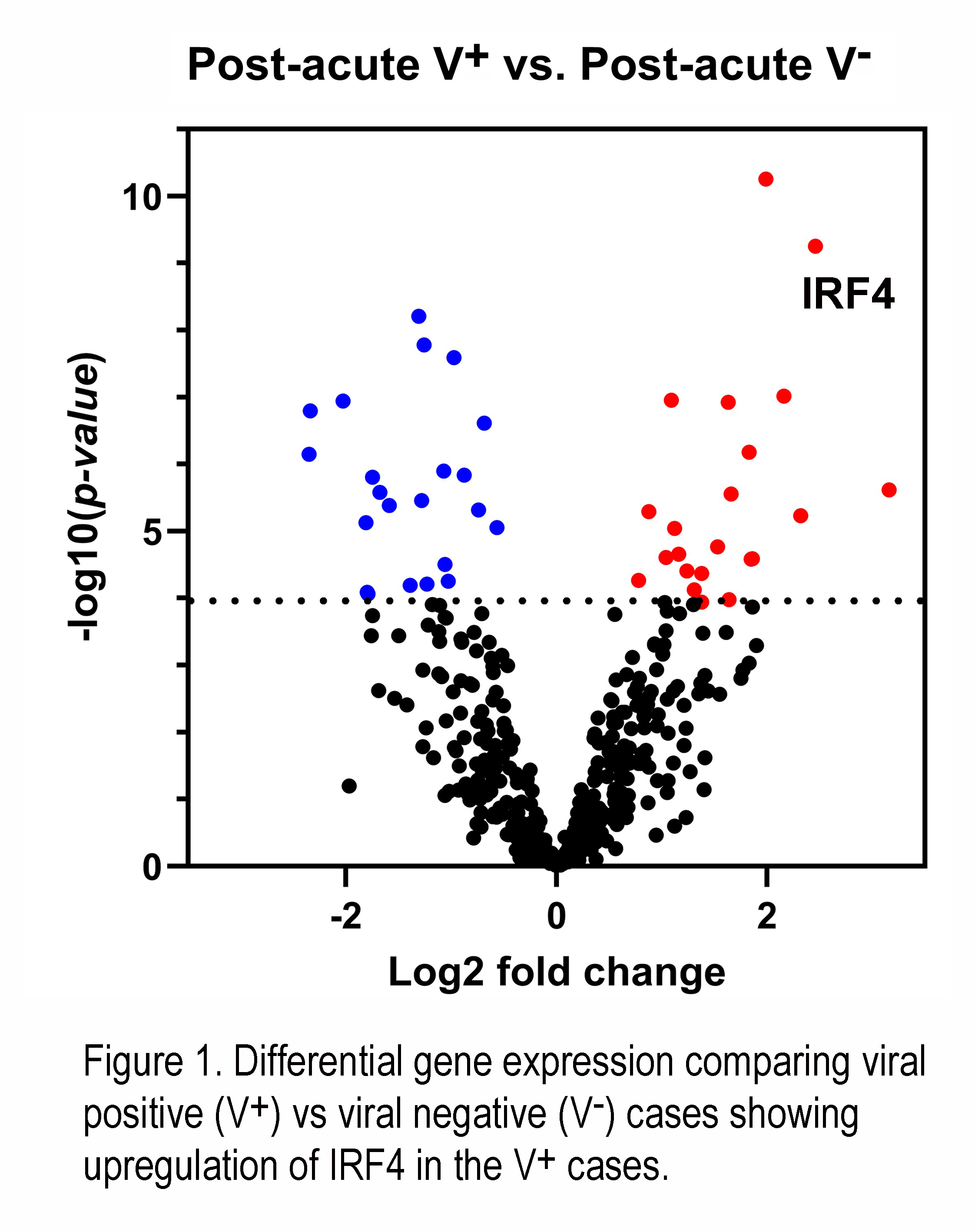
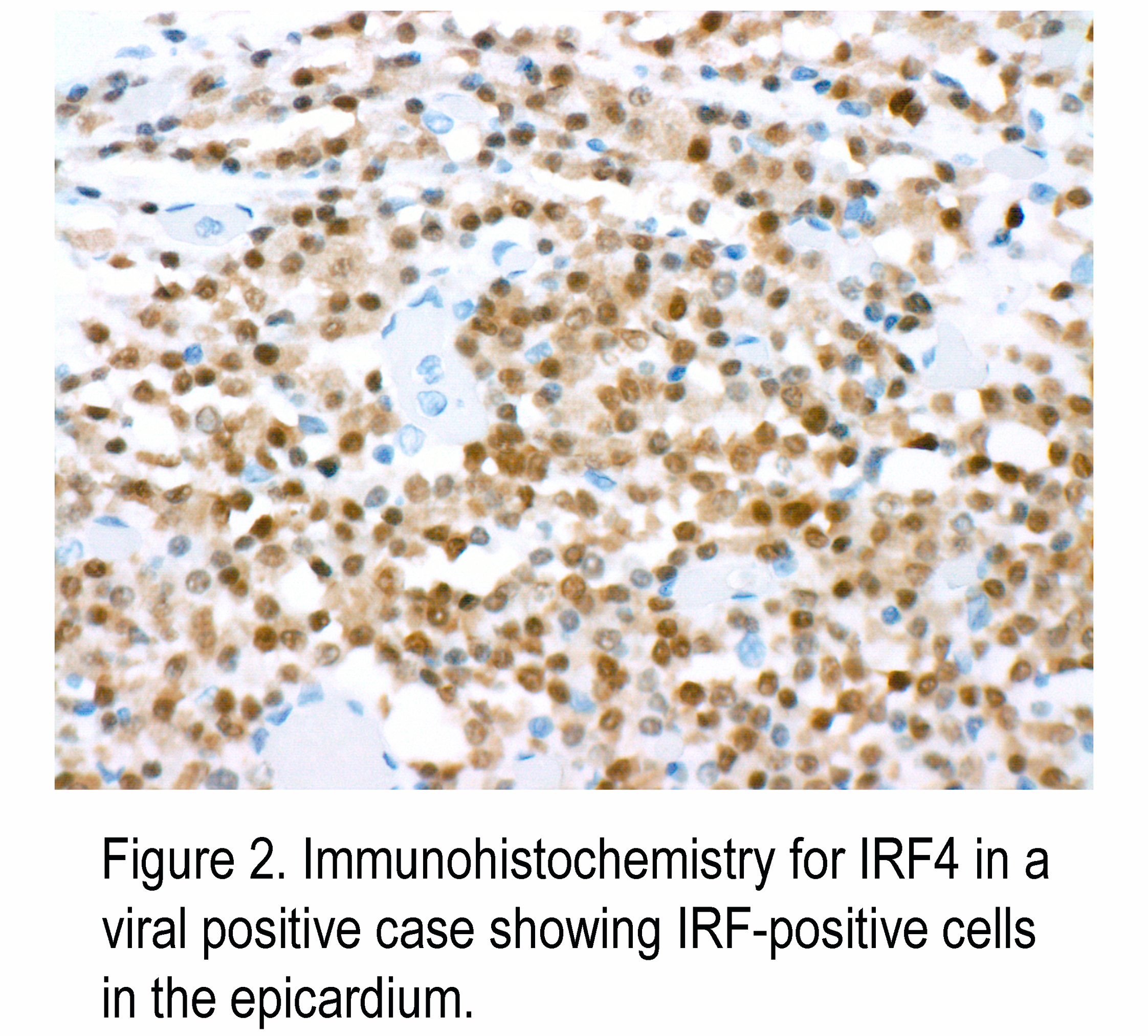
Of 74 cases, 11 were V+ and 63 were V-. There was no significant difference in demographics, comorbidities, cause of death, initial viral variant, interval from initial infection, vaccination status, and presence of myocarditis. CLC was seen in 9 (82%) of 11 V+ cases and 23 (37%) of 63 V- cases (p=0.0075). V+ cases had a shorter interval from last positive swab (median 299 vs 522 days; p=0.01) and a higher prevalence of severe acute COVID-19 (30% vs 3%; p=0.02). V+ hearts showed higher heart-weight-to-LV-wall-thickness ratios (mean 437 vs 340 g/cm; p=0.005), more frequent LV dilatation (64% vs 24%, p=0.01), and more frequent pericardial fluid ≥30 mL (40% vs 14%; p=0.048). SARS-CoV-2 ISH was positive in cardiac myocytes in V+ cases. DGE analysis showed significant alteration in the expression of 44 genes involved in inflammation and host response, particularly interferon regulatory factor 4 (IRF4). By IHC, IRF4+ cells were seen mainly in the epicardium.
Detection of SARS-CoV-2 reverse strand in the hearts of a subset of patients with CLC provides molecular evidence of viral persistence that may drive the structural and immune changes underlying their symptoms, offering mechanistic insights that could inform new diagnostic and therapeutic strategies.
Disclosures:
Faye Victoria Casimero: None; Aram Krauson: None; Pritha Sen: None; David Milstone: None; Maria Martinez-Lage: None; Robert Padera: Consultant - Morair; Vergent; Vanessa Hannay: None; Zakir Siddiquee: None; Iris Lopez: None; Mayara Bearse: None; Andrea Troxel: Other - BioAge; Cellectis; Carolyn Glass: None; Thomas Flotte: None; Michelle Lamendola-Essel: None; Chloe Young: None; Phoebe Del Boccio: None; Paul Benson: None; Jonathan Melamed: None; Avi Rosenberg: None; Silvio Litovsky: None; Richard Moffitt: None; Dezhi Wang: None; Vivian Gainer: None; Ayat Abdelsalam: None; Elizabeth Handel: None; Ben White: None; Ameera Afifi: None; James Stone: None
Authors